Distro 2.0: Web Platform
Rebuilt the web release-submission flow on top of moderated artist research. The middle got shorter, the last step got deliberately stricter, and completion for paying artists held.
Problem
On web, every artist release starts in the submission flow. The old flow ran long, kept requirements in a side FAQ, showed warnings without a fix, and packed metadata, artwork, and pricing into one dense page.
The brief: fewer steps and better completion for paying artists, without more rejected releases.
Evidence
In February 2024, UX research ran six 60-minute moderated interviews with artists, testing early concepts for the new flow from our design director.
Artists wanted requirements and guidance up front. Artists new to distribution needed more context than experienced ones.
Static concepts can't show how people move through a live flow, and the launch was measured before and after, not as a test.
Decisions
Guidance before the form. Three short screens explain distribution requirements before an artist starts, the top ask from research.
Steps in dependency order. Release details, audio, track details, splits, mastering, date, review. Each step unlocks the next. Engineering surfaced the data dependencies, and we set the order together.
Blocking errors vs. warnings. Problems that would fail delivery stop submission. Problems that are risky but allowed only warn. Messages say what to fix.
Friction only where it protects quality. We cut friction in the middle, with autosave and uploads that keep going between steps, and kept it at the end. I pushed for a third-party audio toggle that makes the license upload required, because I believed missing licenses drove rejections. The team also added a fourth accountability checkbox and email verification before a first release.
Solution
Outcome
Completion for paying artists held through launch while the middle got shorter and the last step got stricter.
An early before/after read showed completion more than doubling. Split by plan, that jump came from the old funnel counting two screens free-tier artists never saw. Rejections fell after launch too, but nearly as much on iOS. I claim neither.
Role
Lead designer on the shipped flow, from August 2024 to launch: every screen, state, and error case, the guidance screens, the prototype, and launch QA.
Our design director created the initial concepts tested in research. I worked with the PM, web engineering, and QA through a staged rollout.
Other Projects
Labels Home
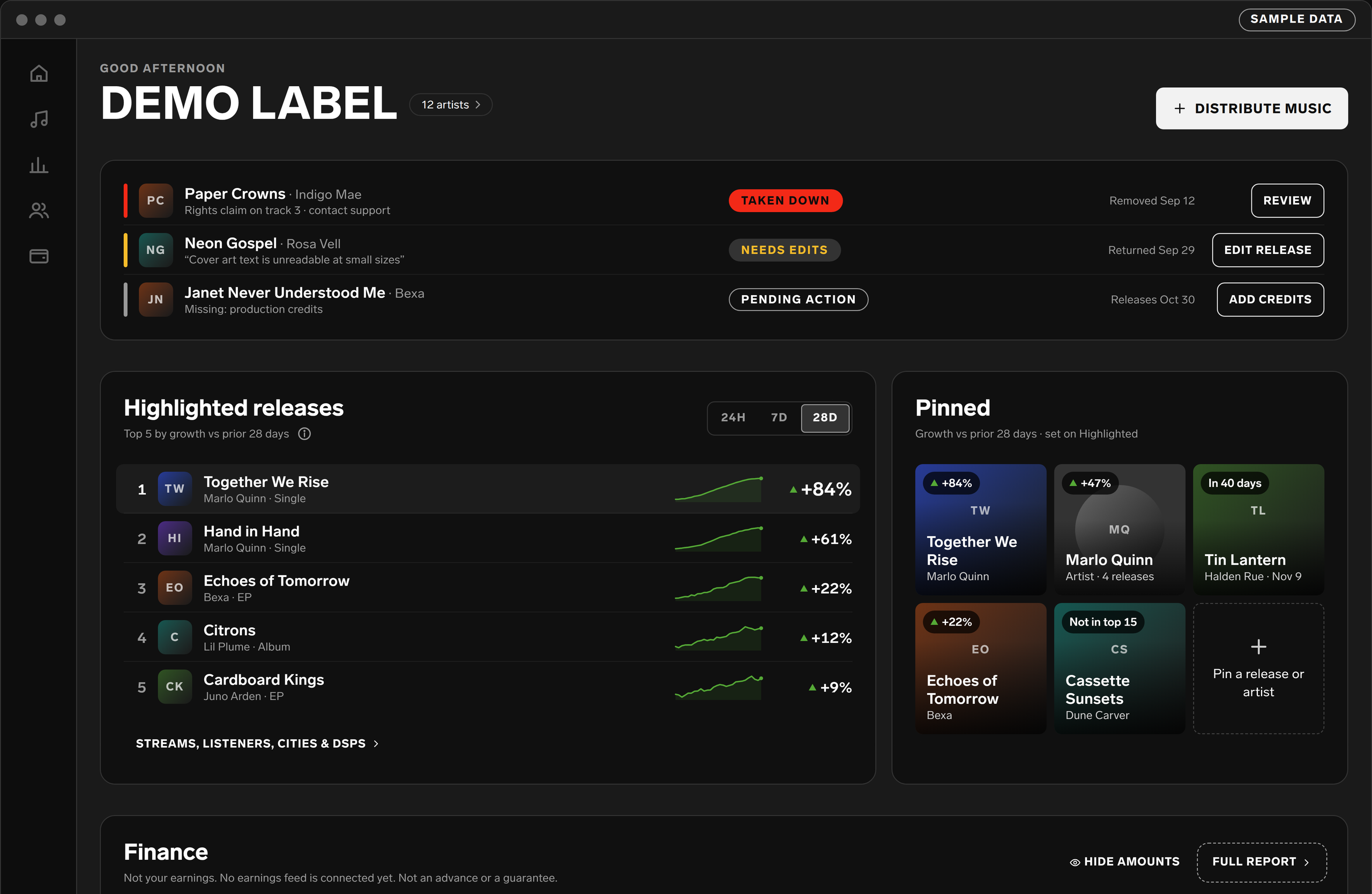
Awaiting PM review: two label sessions shaped nine proposed changes. Nothing is built yet.
Casefile: Fraud Investigation Tooling
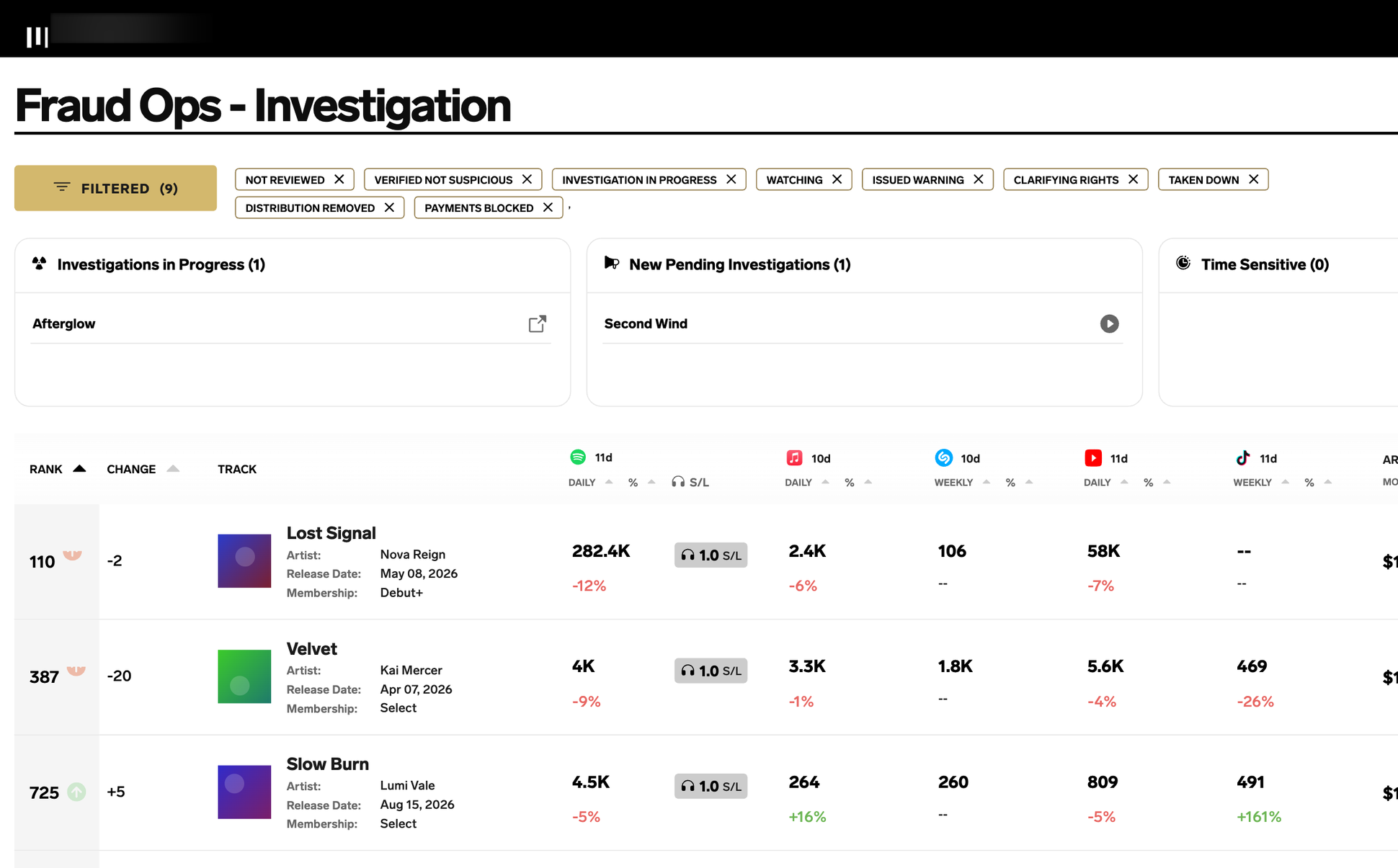
A&R-flagged cases in one record per track, with a full activity log
Design System 2026: A Spec Coding Agents Build From
One token source live on web; about two-thirds of styled web components migrated by late September 2026
Real-Time Royalties
Daily payouts for eligible artists, piloted with a small group before a May 2025 launch